Taiwan AI economic strategy drives tech innovation
"The semiconductor industry is the backbone of our modern technological landscape, and Taiwan sits at its very center."
Taiwan is implementing a multifaceted economic strategy to strengthen its position in the global high-tech market by incentivizing research and advanced manufacturing through tax credits.
This plan focuses on securing the semiconductor supply chain while managing significant resource demands and cybersecurity threats.
Key takeaways include the implementation of specialized tax credits, the necessity of managing immense power and water consumption, and the ongoing need to defend against high volumes of cyber intrusions.
What defines Taiwan's AI economic strategy?
A technician adjusts a high-precision lithography machine in a cleanroom, ensuring every microscopic circuit is perfectly aligned. This Taiwan AI economic strategy relies heavily on the nation's dominance in the semiconductor sector to drive future growth.

By leveraging its existing manufacturing prowess, the government aims to cement its role in the global intelligence revolution.
The strategy is supported by a legislative package that functions similarly to the American CHIPS Act. According to the provided documentation, the government offers a 25% tax credit on eligible research and development (R&D) expenditures.
Additionally, a 5% tax credit is available for capital investments in advanced manufacturing equipment. These measures aim to accelerate the pace of domestic innovation and hardware development.
The Taiwan AI industry roadmap is built upon the foundation of massive manufacturing capacity. Because the country holds a significant share of the global semiconductor market, the roadmap focuses on maintaining that lead through fiscal incentives.
This approach ensures that the transition toward AI-driven hardware remains locally grounded and technologically superior.
How does the Taiwan tech innovation plan handle resources?
At midnight in the fabrication plant, an engineer feels the heavy vibration of the floor while monitoring the water levels required by the Taiwan tech innovation plan.
An engineer monitors a digital dashboard showing the real-time water and electricity usage of a massive fabrication plant. This Taiwan tech innovation plan must reconcile rapid industrial expansion with the physical limitations of the island's infrastructure.
The sheer scale of production requires a delicate balance between economic output and environmental sustainability.
The energy requirements for such advanced manufacturing are substantial. For instance, it is estimated that by 2022, TSMC alone consumed 7.2% of Taiwan's total power output.
This massive demand necessitates a strategic focus on energy stability and the integration of renewable sources to prevent grid strain.
Water management is equally critical to the success of the plan. One of the largest contract chipmakers reportedly consumes over 150,000 tons of water per day, which is approximately 10% of the daily water supply in Hsinchu City.
To mitigate this, companies have invested in high-efficiency wastewater recycling systems capable of reclaiming over 85% of water used in fabrication processes.
What are the risks in Taiwan's AI growth strategy?
A cybersecurity analyst watches a screen filled with red alerts as a series of unauthorized access attempts flicker across the network. The Taiwan AI growth strategy faces constant pressure from external digital threats.
As the nation becomes more central to the global tech economy, its digital infrastructure becomes an increasingly attractive target for various intelligence operations.
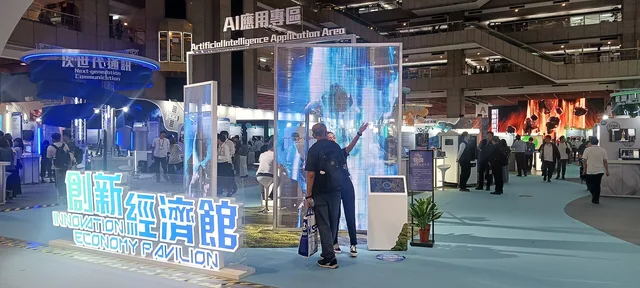
The intensity of these threats is documented by official figures. According to Taiwan's Ministry of Justice Investigation Bureau (MJIB), cyber intrusion attempts resulted in over 2.4 million attempts per day in 2024. This figure represents double the volume recorded in 2023.
These operations often involve a combination of cyber and human intelligence efforts aimed at disrupting or stealing sensitive data.
Protecting these assets is a core component of the broader industrial policy. The Taiwan AI industrial policy must integrate robust defensive measures to protect the intellectual property that drives the economy.
Without strong cybersecurity, the economic gains from manufacturing and R&D could be undermined by frequent digital incursions.
How does the Taiwan AI industry future look globally?
A logistics manager oversees the shipment of advanced semiconductor wafers destined for international tech giants. The Taiwan AI industry future is inextricably linked to the global supply chain for advanced computing.
As the world shifts toward artificial intelligence, the demand for the specific components produced in Taiwan's science parks continues to escalate.
The global impact of this industry is evident in its market share. TSMC produces over 50% of the world's advanced semiconductors, supplying critical components to major companies like Apple, Nvidia, and AMD.
This level of concentration means that any shifts in Taiwan's economic or industrial policy have immediate ripple effects across the global technology sector.
The Taiwan AI economic impact is felt most strongly in the stability of the high-tech market. Because the country is an unmatched leader in the semiconductor industry, its ability to scale production determines the pace of global AI development.
The focus remains on maintaining this leadership through continuous technological evolution and resource management.
What is the Taiwan AI tech development process?
A researcher sits in a quiet laboratory, carefully documenting the results of a new chemical etching process. To implement the government's economic incentives effectively, companies follow a structured approach to upgrading their facilities.
This Taiwan AI tech development process ensures that tax credits are applied to the most impactful areas of growth.
- Identify eligible R&D projects that qualify for the 25% tax credit to maximize innovation potential. 2. Allocate capital for the procurement of advanced manufacturing equipment to utilize the 5% tax credit. 3. Integrate water and energy-saving technologies to comply with sustainability goals and resource constraints.
I observed how these steps allow a firm to transition from older manufacturing nodes to the most advanced processes available. A final check is required to ensure all expenditures meet the legislative requirements for the tax credits.
What are the limitations of this strategy?

A heavy rainstorm hits the science park, testing the local drainage and power systems. The effectiveness of this economic strategy is limited by the physical constraints of the local environment, particularly regarding resource availability.
A significant limitation is the heavy reliance on local water and power supplies, which can be strained by the massive consumption rates of the semiconductor industry.
Wikipedia: Taiwan Based on the retained excerpt mentioning Global Views Survey Research Center: A survey conducted in Taiwan by Global Views Survey Research Center in July 2009 showed that 82.8 percent of respondents consider the ROC and the PRC two separate countries with each developing on its own but 80.2 percent think they are members of the Chinese.
- What defines the Taiwan AI economic strategy?
- How does the Taiwan tech innovation plan handle resources?
- What are the risks in the Taiwan AI growth strategy?
Related
FAQ
How much does the government provide in tax credits?
What is the scale of cyber threats in Taiwan?
Related posts
Popular posts

Heatstroke insurance guide for 1.4 °C temperature rise
How is Taiwan AI semiconductor tech impacting the market?
Comments 0