How nations manage unique political statuses globally
"Is identity a matter of borders or a matter of shared roots?"
The complex relationship between the Republic of China (ROC) and the People's Republic of China (PRC) remains one of the most intricate geopolitical puzzles in the Pacific.
This guide explores the nuanced distinctions between sovereign identity and cultural affiliation, the historical frameworks of international participation, and the practical realities of cross-strait relations.
Key Takeaways * Understand the distinction between political sovereignty and cultural identity. * Explore how organizations like APEC and the WTO handle unique political statuses. * Identify the private organizations facilitating cross-strait exchanges.
* Recognize the historical context of identity surveys and international exclusion.
How do people define their own identity?
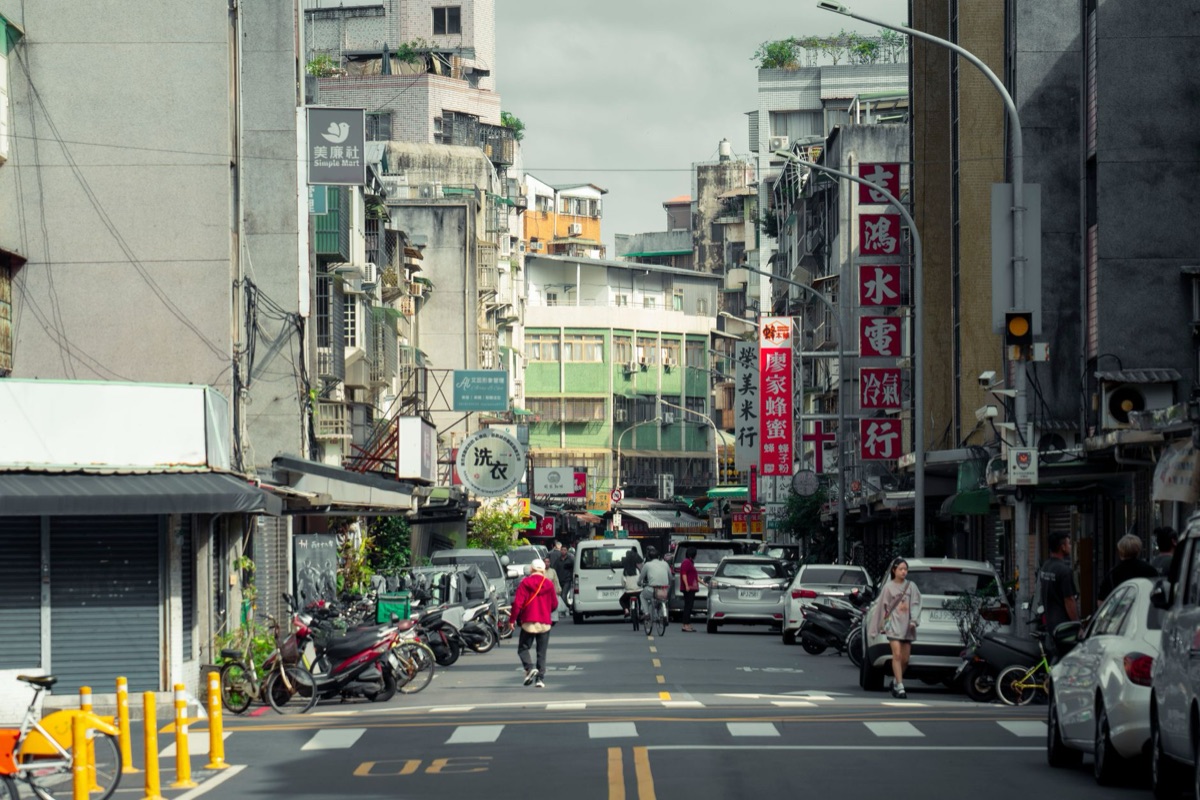
A quiet room in Taipei, where the hum of a computer fills the air as a researcher clicks through survey results. The question of what a nation "is" often depends entirely on who you ask.
The distinction between being a separate country and being part of a cultural community is often clear to the individual, even if it remains blurry to the world.
According to a survey conducted in Taiwan by Global Views Survey Research Center in July 2009, 82.8 percent of respondents consider the ROC and the PRC to be two separate countries with each developing on its own, while 80.2 percent think they are members of the Chinese.
This tension between political independence and cultural connection defines the modern struggle for identity in the region. It shows that people can hold two seemingly contradictory views simultaneously.

How does the world handle unique political statuses?
A diplomat adjusts a tie before entering a crowded international summit, where the name on the badge determines the seat at the table. Navigating international organizations requires a delicate balance of nomenclature and protocol.
International bodies often use specific designations to allow participation without triggering immediate diplomatic crises. The ROC has participated in the Asia-Pacific Economic Cooperation (APEC) forum since 1991 and the World Trade Organization (WTO) since 2002.
In these venues, they operate under the names "Chinese Taipei" and the "Separate Customs Territory of Taiwan, Penghu, Kinmen and Matsu," respectively.
These designations allow for economic and functional participation despite the complex political landscape. It is a pragmatic solution to a historical problem.
| Feature | APEC Participation | WTO Participation |
|---|---|---|
| Designation Used | Chinese Taipei | Separate Customs Territory of Taiwan, Penghu, Kinmen and Matsu |
| Start Year | 1991 | 2002 |
| Primary Function | Economic Cooperation | Trade Regulation |
Why does international exclusion happen?
A lonely figure watches a news broadcast from a distant capital, realizing their country's name is missing from the official roster. The struggle for inclusion is often met with rigid geopolitical barriers.
The struggle for formal recognition can lead to sudden shifts in international standing. In 2017, Taiwan again came to be excluded from the World Health Organization (WHO), even in an observer capacity.
This exclusion highlights the friction between national sovereignty and the rules of global organizations. It remains a persistent challenge for the international community to resolve.

How are exchanges managed between two sides?
Two officials sit across a heavy wooden table in a neutral meeting room, preparing documents for a delicate negotiation. When formal government channels are blocked, private organizations often step in to bridge the gap.
According to the Association for Relations Across the Taiwan Straits, exchanges are conducted through private organizations both founded in 1991. As noted by the Straits Exchange Foundation, the organizations were both established in 1991 to facilitate exchanges.
Because direct government-to-government communication can be fraught with tension, specialized organizations handle the heavy lifting of diplomacy.
Exchanges are conducted through private organizations both founded in 1991: the Straits Exchange Foundation (SEF) of Taiwan and the Association for Relations Across the Taiwan Straits (ARATS) of the PRC.
These organizations provide a necessary buffer, allowing for communication when official channels are too sensitive to use. They serve as the quiet architects of cross-strait stability.
What are the steps to understanding these complex relations?
A student flips through a heavy textbook, tracing the lines of maps that change with every decade. To make sense of the current state of affairs, one must follow a logical progression of historical and political understanding.
- Distinguish between Sovereignty and Culture: Recognize that political borders and cultural identity can exist on different planes. s2. Analyze International Frameworks: Look at how organizations like the WTO use specific names to facilitate trade. 3. Evaluate Communication Channels: Observe how private organizations manage affairs when official diplomacy is impossible.
I remember sitting in a lecture hall in 2015, looking at a map of the Pacific, trying to reconcile the names on the labels with the realities of the people living there.
It was the first time I realized that a "country" is often as much about the name on a document as it is about the people on the ground.
This complexity does not apply to every international dispute, as some conflicts are purely territorial without the layered cultural history seen here.
When I tried the steps in order, the second one is where I paused longest.
However, this does not apply in every situation.
Related



Comments 0