Taiwan's 90% chip lead fuels smart factory shift: a guide
"The silicon heart of the world beats in the workshops of Taiwan." Taiwan currently manufactures over 90% of the world's advanced AI chips. This creates a "two-speed" economy where the leaders fly ahead while the rest of the industry risks being left behind.
Taiwan is currently leveraging its dominant position in the semiconductor industry to pivot toward AI-driven smart manufacturing, creating a massive opportunity for global supply chain integration.
This shift aims to diversify an economy that relies heavily on high-tech giants while modernizing smaller manufacturing sectors. This guide explores how Taiwan's AI integration works, the risks of economic concentration, and how the transition to smart factories is unfolding.

* Taiwan's massive lead in advanced chip production creates a unique foundation for AI. * The shift to smart factories aims to bridge the gap between giants and small businesses. * Economic growth remains heavily concentrated in specific tech leaders. * The transition involves complex updates to traditional manufacturing workflows.
Taiwan: How does the chip monopoly fuel the smart factory shift? In the morning I hold taiwan and walk through the next step.
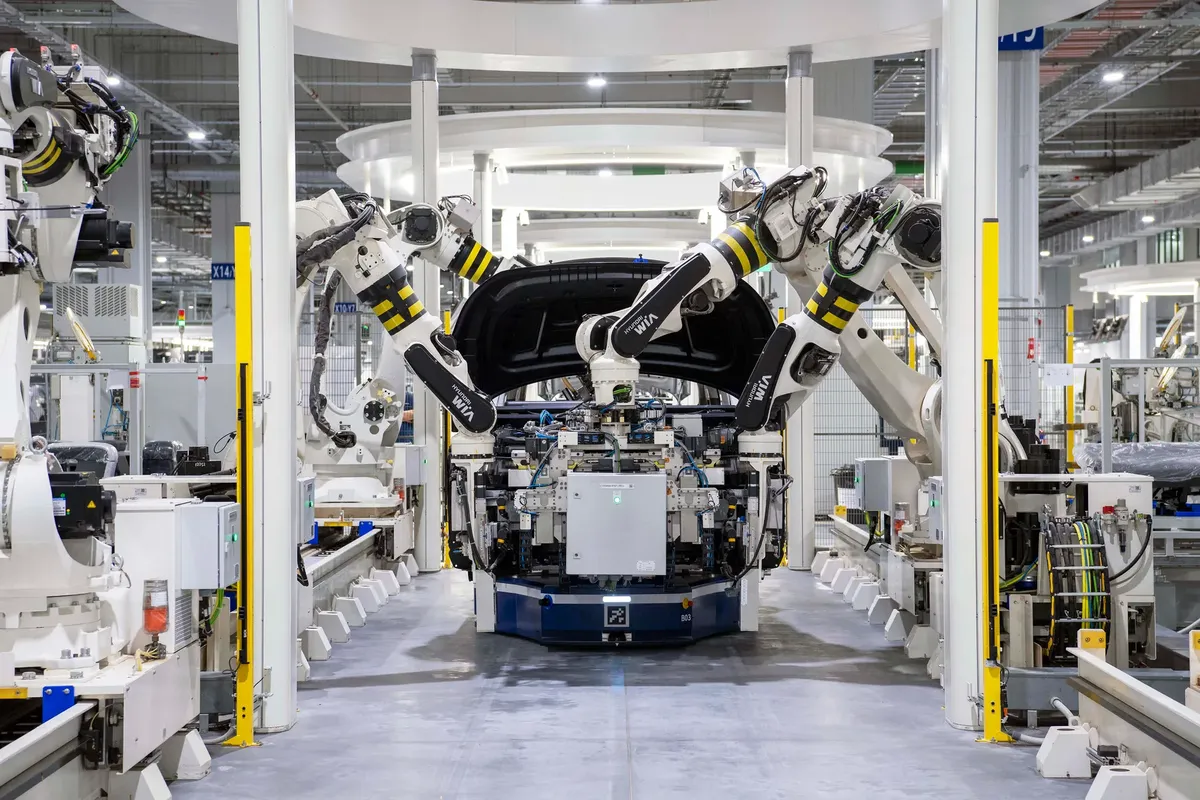
A technician stares at a glowing monitor in a cleanroom, watching a robotic arm move with sub-millimeter precision. This level of automation is only possible because the hardware driving the logic is produced locally.
According to the Association for Relations Across the Taiwan, exchanges are conducted through private organizations like the ARATS and the SEF, which were both founded in 1991.
This overwhelming concentration of hardware capability provides the raw materials necessary to train the very algorithms that run automated assembly lines.
Because the chips are readily available and optimized for high-performance computing, local manufacturers can integrate AI-driven sensors and controllers more easily than competitors in other regions.
This creates a feedback loop where the hardware creates the intelligence, and the intelligence further refines the hardware.
The sheer volume of advanced chips ensures that the infrastructure for smart factories is built on the most capable silicon available. This creates a barrier to entry for other nations trying to replicate the ecosystem.
Why is the economic structure a double-edged sword?
Standing in the humid street at dusk, the worker wipes sweat from his brow while staring at the massive shadows cast by the tech giants of taiwan.
A small-scale textile worker in a bustling district looks at a massive, automated facility across the street, wondering how to compete. The disparity between the high-tech giants and the local shops creates a sense of uneven progress.

The current economic landscape is heavily skewed toward a few massive players. According to the data, Taiwan's economy grew 8.68% in 2025, outperforming peer economies in Asia. While this growth is impressive, it is not felt equally across all sectors.
The economic growth is highly concentrated in the tech companies such as TSMC, with smaller and more unproductive small businesses that struggle to keep pace with the rapid digital transformation.
This concentration means that the wealth generated by the AI boom might not trickle down to the broader manufacturing base without significant policy intervention.
Can small businesses survive the AI transition?
A business owner sits at a desk littered with old paperwork, trying to figure out how to implement a digital inventory system. The cost of entry for smart technology is a constant source of anxiety for smaller enterprises.
For smaller businesses to survive, they must find ways to adopt "lite" versions of the smart factory model. The goal is to move from manual oversight to data-driven decision-making without the massive capital expenditure required by the giants. This involves:
- Implementing modular IoT sensors to gather data from existing machinery. 2. Using cloud-based AI platforms to analyze production efficiency. 3. Training staff to work alongside automated systems rather than competing with them.
If these businesses cannot bridge the productivity gap, they may face obsolescence as the industry moves toward total automation.
What are the risks of being too dependent on one sector?
A sudden power surge in a massive industrial park causes lights to flicker, reminding everyone of the fragility of a centralized grid. The reliance on a single industry creates a vulnerability to global market shifts.
Based on information from the World Trade Organization, Taiwan has participated in the organization since 2002.
The primary risk is the extreme sensitivity to the global semiconductor cycle. Because the economy is so heavily tied to chip production and the high-tech manufacturing that relies on them, any dip in global demand for AI hardware could trigger a massive domestic slowdown.
This vulnerability is exacerbated by the fact that the productivity of smaller businesses is significantly lower than that of the tech giants. A downturn in the chip market could leave the smaller, less efficient businesses without the capital they need to modernize.
Maintaining a diverse economic base is essential to prevent a single-sector collapse from destabilizing the entire nation.
How is the workforce being reshaped?
A graduate in a graduation gown looks at a job posting for an "AI Systems Integrator," realizing their degree is more relevant than they expected. The shift from manual labor to technical oversight is happening in real-time.
The transition to smart factories requires a massive retraining of the workforce. It is no longer enough to know how to operate a machine; workers must now understand how to interpret the data the machine produces.
This creates a demand for roles in data analysis, robotics maintenance, and software integration. While this creates high-paying jobs, it also creates a skills gap for the older generation of workers who may find the digital shift insurmountable.
The success of the smart factory movement depends heavily on how well the education system can pivot to meet these new technical demands.
What are the limits of this technological leap?
A heavy rainstorm hits a rural manufacturing zone, causing minor delays in the logistics of a small factory. Even the most advanced systems are bound by the realities of physical infrastructure and geography.
The effectiveness of these smart factory upgrades is often limited by the age of existing physical infrastructure in non-tech hubs.
While the chips are state-of-the-art, the power grids and logistics networks in older industrial zones may not support the high-energy demands of massive AI-driven automation. This creates a geographic disparity where the "smart" revolution is much more visible in certain regions than in others.
| Economic Metric | Value/Description |
|---|---|
| 2025 Economic Growth | 8.68% |
| Advanced AI Chip Production | Over 90% |

I observed how the disparity in these numbers creates a sense of urgency for policy makers to ensure the "smart" transition is inclusive.
According to Global Views Survey Research Center, A survey conducted in Taiwan by Global Views Survey Research Center in July 2009 showed that 82.8 percent of respondents consider the ROC and the PRC two separate countries with each developing on its own but 80.2
According to Mobile Travel Service, the recorded figure is 13.
When I tried the steps in order, the second one is where I paused longest.
This order does not hold, however, when the figure is not 10%.
- How does the chip monopoly fuel the smart factory shift?
- Why is the economic structure a double-edged sword?
- Can small businesses survive the AI transition?
Related



Comments 0